
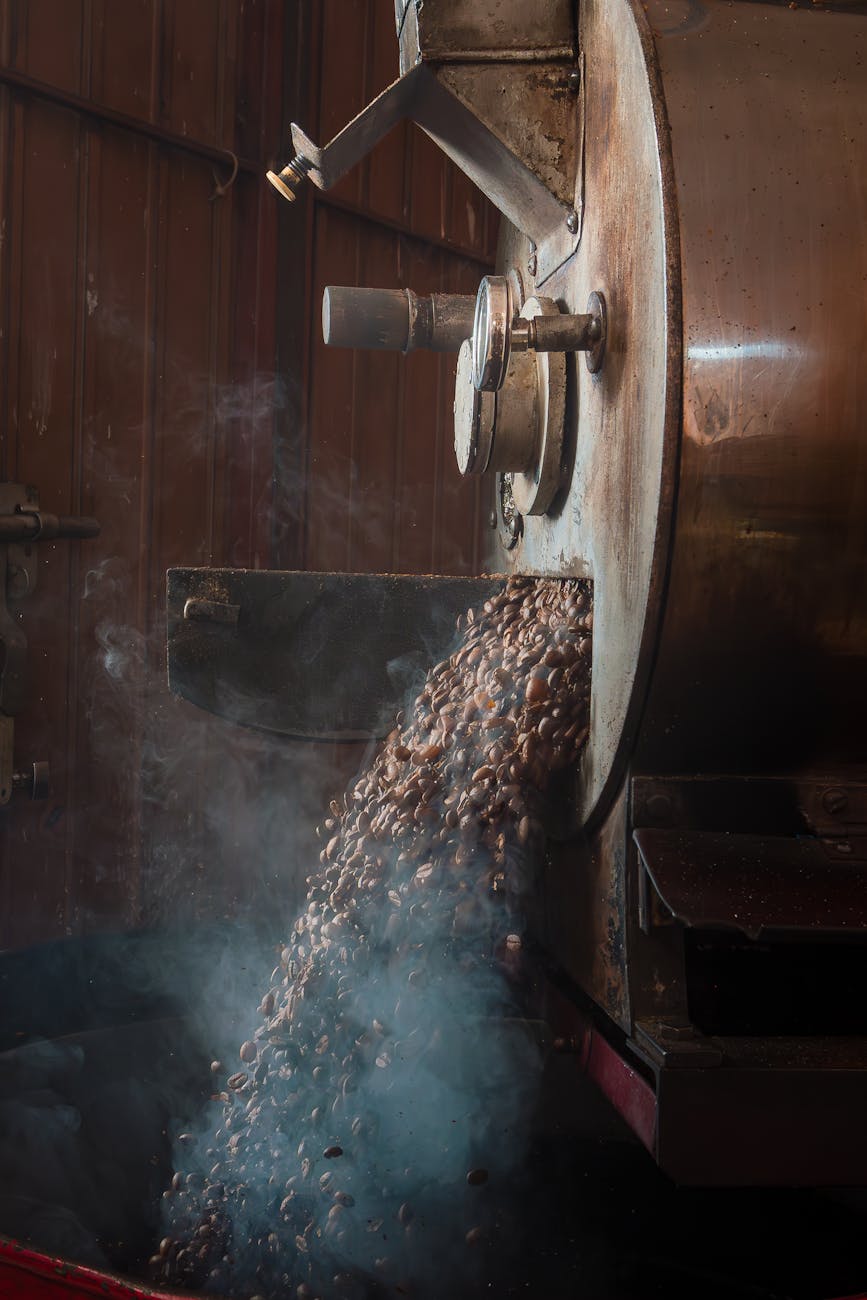
Coffee roasting sits at the intersection of engineering and creativity. A roaster manages heat transfer, airflow, and timing while responding to constantly changing conditions inside the roasting drum, listening to the cadence of the roast, taking visual queues from the bean color, and chasing the intoxicating aroma of that perfect roast. Each coffee behaves differently depending on density, moisture content, and processing method. Roasters adjust variables throughout the roast to guide development while avoiding defects such as underdevelopment or scorching.
Science
Modern coffee roasting often combines sensory observation with data tracking. Temperature curves provide insight into how energy is being imparted to the bean, helping create repeatable results while still allowing experimentation. The modern roaster has a plethora of technological advantages which help to maintain consistency across roasts and consistency through a product. Consistency is particularly important for small-batch roasting. Careful note-taking and evaluation allow roasters to refine profiles over time, ensuring each batch reflects intended flavor characteristics.
A roaster may feel they can control every variable and replicate roasts exactly hour-to-hour, day-to-day, week-to-week, and so on. However, a coffee bean is an agricultural product with annual grow cycles and often thousands of miles of travel ahead of it after it’s been picked and processed. Every step of the process introduces innumerable variables that impact the flavor and consistency of the roast.
Art
Despite technological advances, roasting remains deeply human. Sound, smell, and visual cues all contribute to decision-making during critical moments of development. Roasting is about using the tools available to the best of your ability and what better tools do humans have for analyzing the roasting process than their own ears, nose, and eyes? The art of expression lies at the heart of coffee roasting where the roaster is expressing the coffee bean’s potential via their interpretation of potential. Thousands of hours of experience allows the roaster the flexibility of creativity and many roasters prefer to use as little technology as possible to roast their coffee. There’s no wrong way about it for such a subjective product.
The roaster’s responsibility is not to impose flavor, but to interpret potential; they translate raw agricultural product into something expressive, approachable, and enjoyable.
Leave a Reply